Verticutting the lawn: It's really easy
Here's the rejuvenation treatment for your lawn: Verticutting loosens the soil and ensures dense green growth. What do you need to pay attention to, how do you proceed with verticutting, and which verticutter is suitable? Here are the most important tips.
What is lawn verticutting?
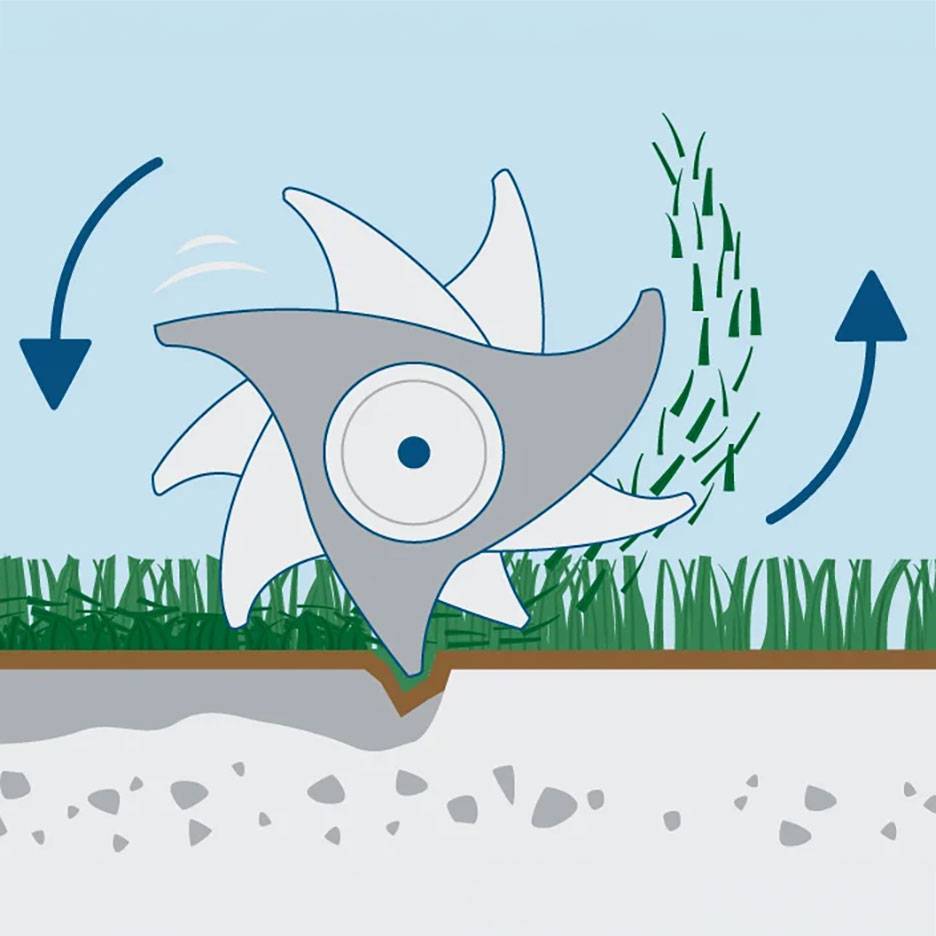
Verticutting is like a "deep exfoliation" for your lawn’s surface. Using a verticutter, you lightly score the turf to remove moss, thatch, and weeds. This gentle scoring encourages the plants to grow new shoots. At the same time, by clearing away the debris, the soil can "breathe" more easily. This process prevents mold and optimizes nutrient absorption. The result? A thicker, healthier, and more beautiful lawn!
When should you perform the lawn verticutting?
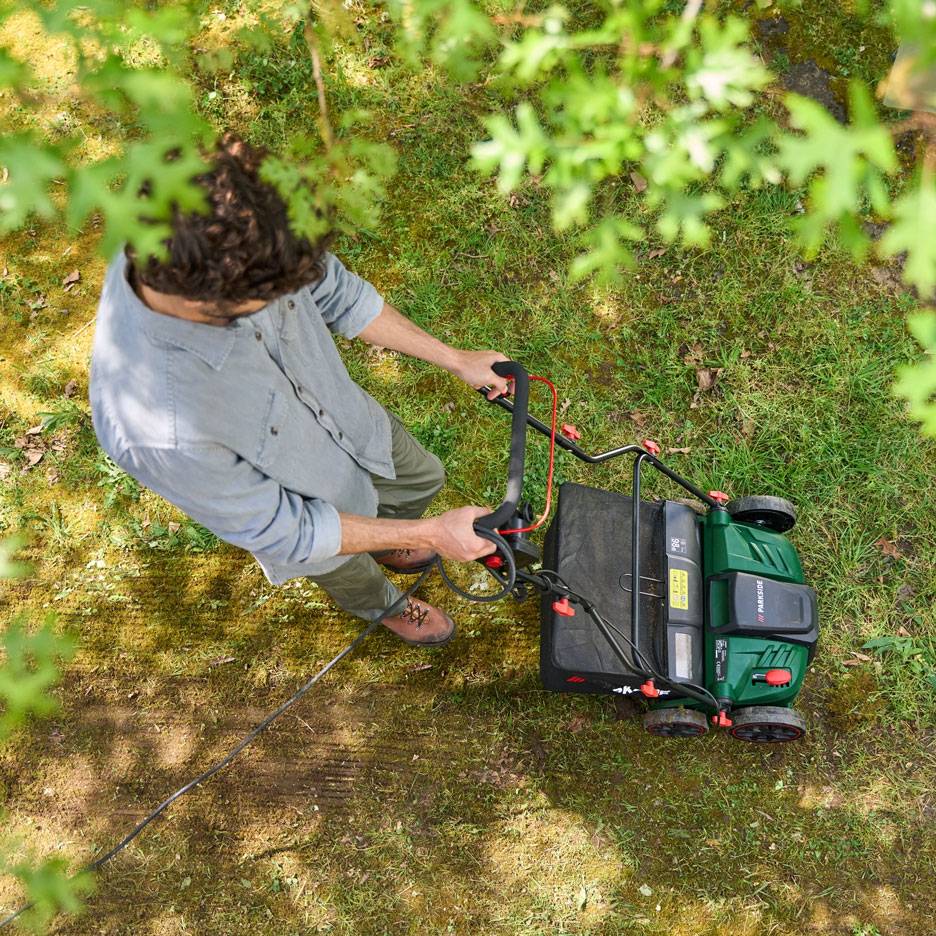
The best time to perform your lawn verticutting is in the spring—before any other lawn care tasks. This optimally prepares the grass for the growth phase. If necessary, you can perform the lawn verticutting again in the autumn. Nothing more than that.
You can find out what else you should do throughout the year in the Lawn Care Guide!
Which lawn verticutter is best suited?
The verticutters resemble the lawn mowers, but are tailored to their specific task and are available in various designs. Which one is the best fit? That's up to you:
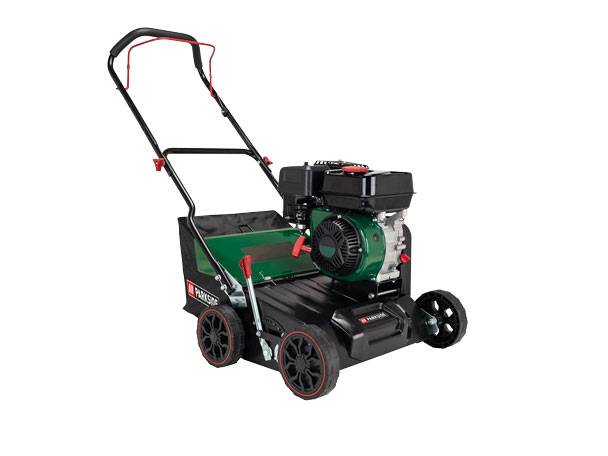 Petrol verticutter
Perfect for large areas, powerful and with a long reach.
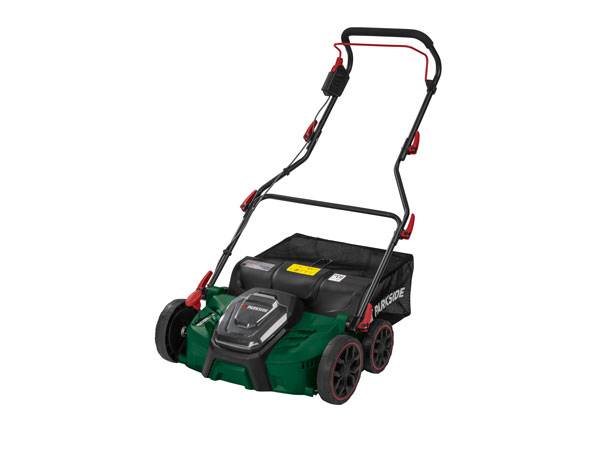 Battery-powered verticutter
Great for medium-sized areas, easy to handle, versatile and quiet.
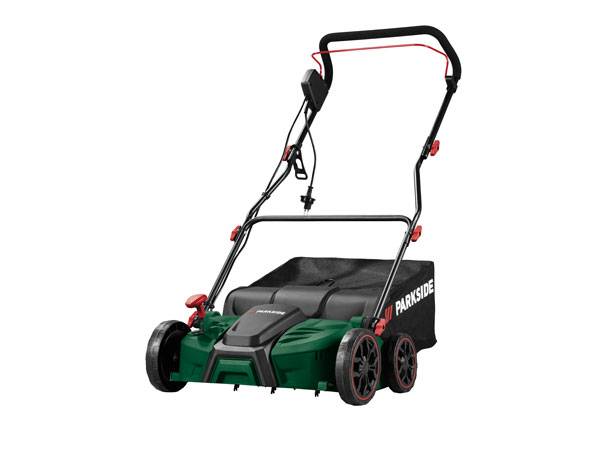 Electric verticutter
Great for medium-sized areas and very quiet too
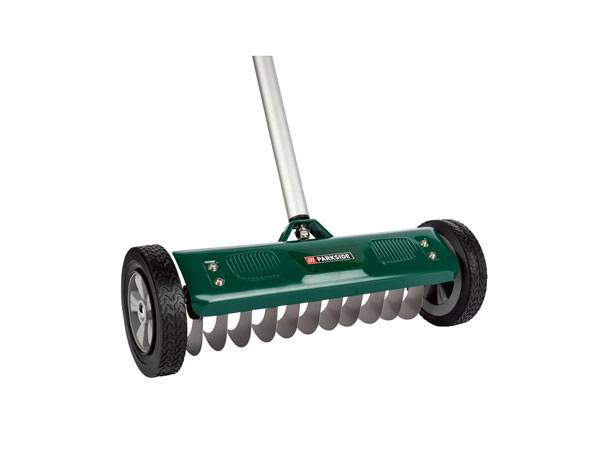 Hand verticutter
Ideal for small spaces, great value and quiet.
Verticutting the lawn: Four steps to the perfect lawn care
1.Mow the lawn
2.Adjust the cutting depth
3.Perform the verticutting methodically
4.Perform the lawn care
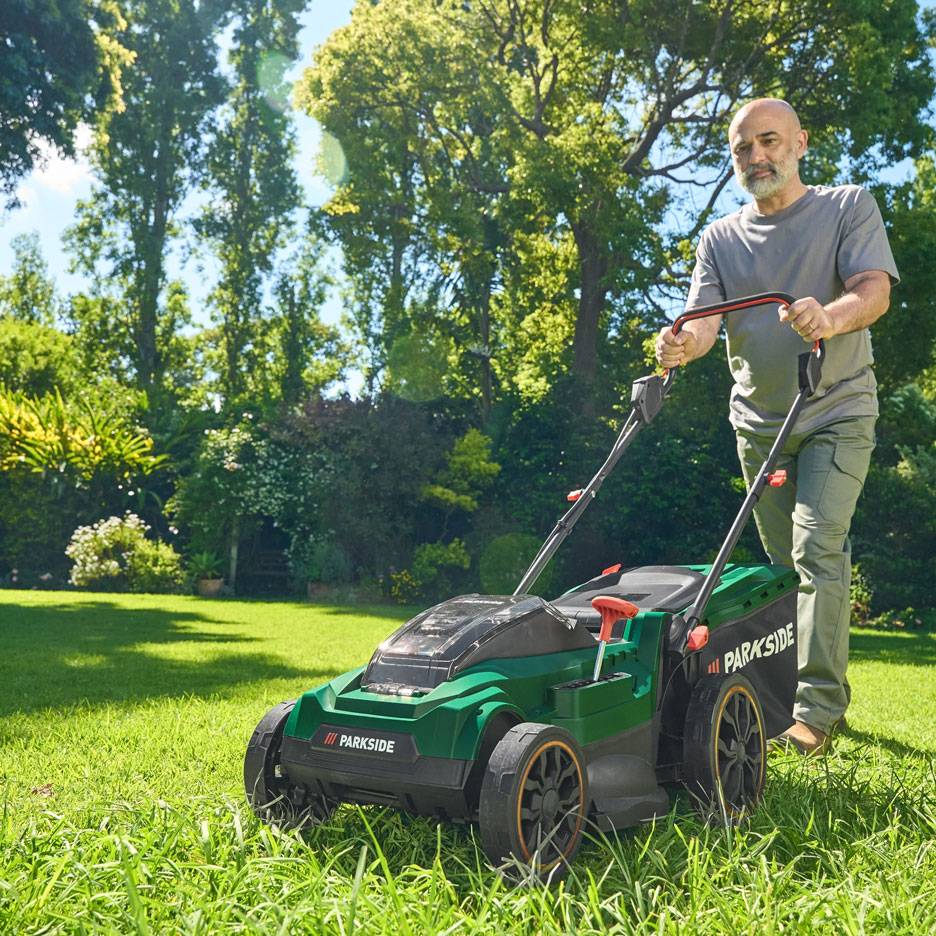
1. Mow first, then perform the verticutting
While the verticutting is important for the lawn, it also puts stress on it. Therefore, you should leave it alone for a while after verticutting. You should mow it two to three times before verticutting. Cut the stalks to a length of about 2 cm.
2. How to perform the verticutting correctly—how deep should you cut?
The lawn verticutters can be set to a specific cutting depth. You can determine this by placing the verticutter on the ground—the blades should just touch it. A few test meters will show whether the cutting depth is set correctly. The following generally applies:
- For the young lawns with the shorter root systems, use a cutting depth of no more than 3 mm.
- For the older, mossy and weed-covered lawns, you should mow with a depth of up to 5 mm.
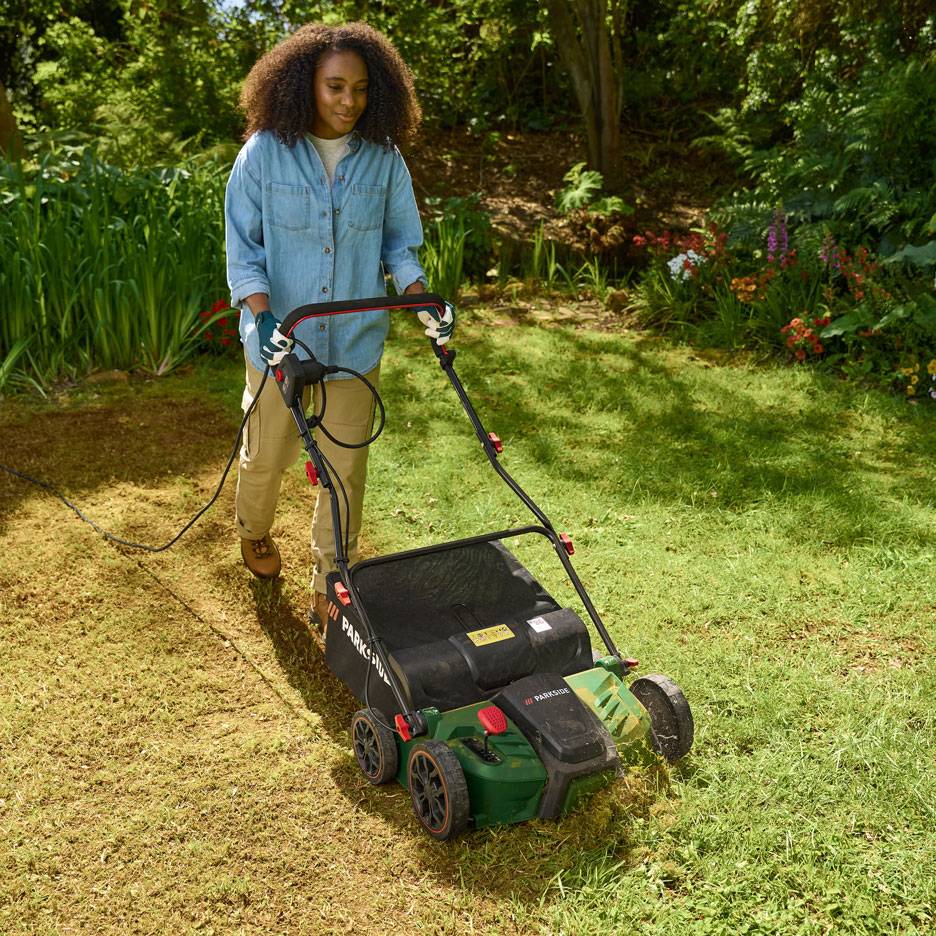
3. How do you proceed with the verticutting?
Along and across the lawn? Better not. The verticutting of the area should be performed methodically – first in precise longitudinal strips, then in precise transverse strips. This draughtboard pattern ensures that you catch all the spots.
4. What do you do after the verticutting?
After deep cleaning comes deep care: If you lime, fertilise and water your lawn after verticutting, the nutrients will reach the soil particularly effectively. If bare patches become visible during the verticutting, reseed these areas with the grass seed.
Frequently asked questions and answers about verticutting
Yes, as long as you mow the lawn before verticutting, you can do both tasks on the same day. A break from mowing is recommended after verticutting.
Perform verticutting and fertilise only when the lawn is dry and the soil is slightly moist. When choosing a fertiliser, pay attention to the current nutrient requirements of the soil—a test will help!
The lawn verticutting is unnecessary if the lawn has hardly any thatch, looks super healthy, and the weather is particularly hot or cold. The young lawns also do not require the verticutting.
Ventilation or aeration is not the same as verticutting. During aeration, the soil is loosened deeply to facilitate the drainage of water. This is rarely necessary with a normal lawn in the garden—the aeration provided by verticutting is sufficient.