Touring SUP: Preparation for long Stand Up Paddling tours
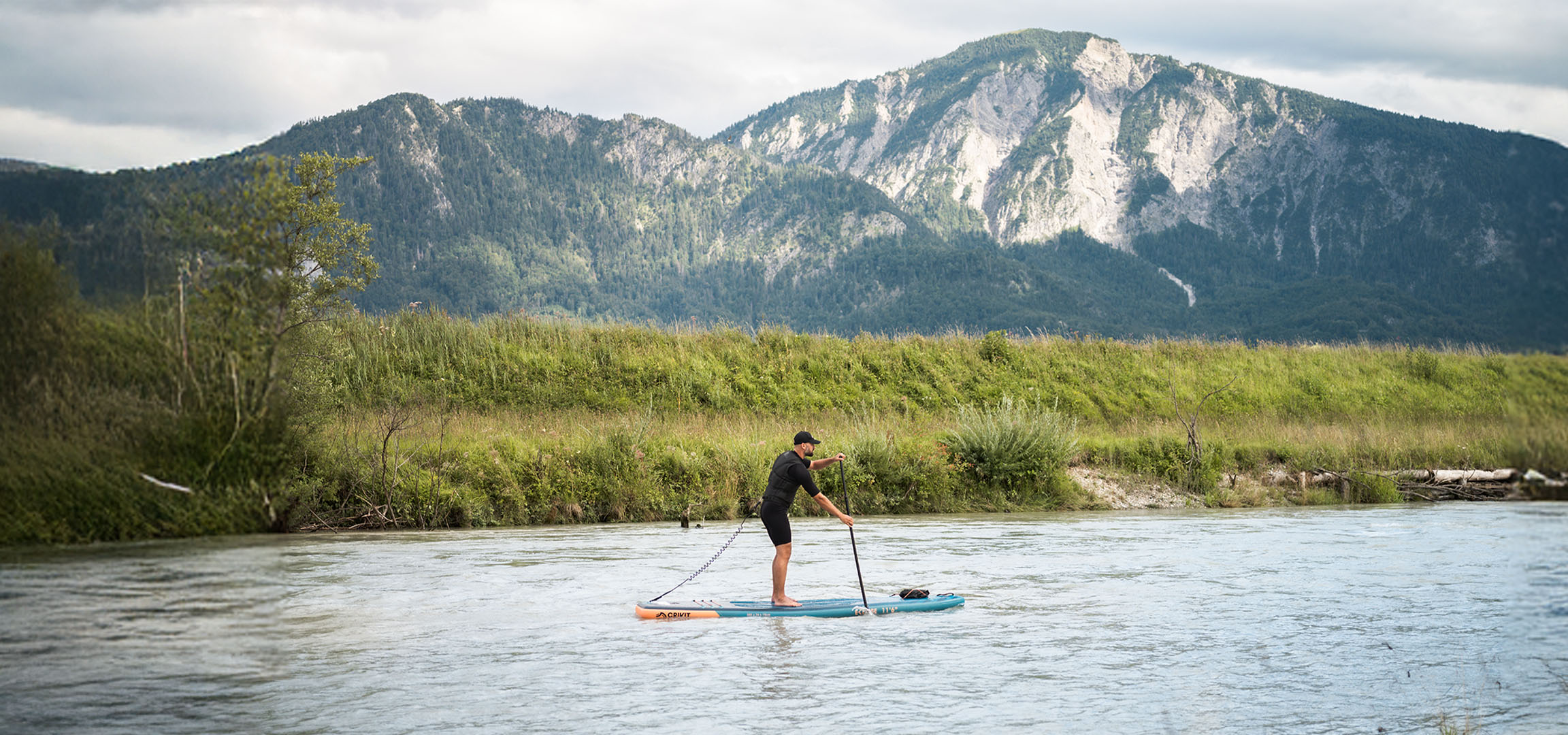
Stand Up Paddling is very trendy right now.Touring SUP is particularly popular with outdoor enthusiasts who enjoy covering longer distances on the water.Whether on calm lakes, gently flowing rivers or along the coast:SUP touring combines sporting activity with experiencing nature, slowing down and adventure.However, anyone who wants to spend a longer time on the water should prepare accordingly.This article will tell you how to prepare yourself physically, technically and practically for longer SUP tours.Our SUP expert Valentin, a professional SUP surfer, gives you the most important tips on equipment and preparation, and reveals how you can stay safe on the touring SUP even as a beginner.
What is touring SUP?
Touring SUP (Stand Up Paddling) describes longer paddling tours on the water—whether on rivers, lakes or in the sea.In contrast to all-round boards, the touring boards are narrower, longer, and offer better straight-line stability and more speed.They are ideal for:
- Day trips with distances of 10 km or more
- Paddling sessions lasting several hours
- Multi-day tours with luggage
Touring SUP is perfect for anyone who wants to experience nature, challenge themselves athletically, or simply escape from everyday life on the water.
Touring SUP for beginners: You need to know this
Longer SUP tours are a true nature experience that even beginners shouldn't miss.Although touring sounds like something for professionals, it isn't.“If you have already done a few tours with a classic board and now feel like going further out, then a touring SUP is just right for you,” SUP expert Valentin explains.“Even though it might sound complicated, it isn't.” If you feel confident on the SUP and are keen to go on longer tours, nothing stands in the way of your adventure on the water.With the right setup, a solid basic technique and tips from our expert, you have everything you need for your first tour with a touring SUP.
Preparing for touring SUP: Technology, Planning & Safety
Preparation is everything.“This way you can really get the most out of your tour,” Valentin recommends.How does that work?Here are his most important tips for preparation:
Plan your route realistically
Perhaps the most important thing before you go out on the water:Take a look at your route.“How long is it?Where can you get into the water—and where can you get out again in an emergency?” are questions that expert Valentin says you should answer.You should also definitely plan for the return journey:“Where do you want to turn?And do you have enough strength for the second part?Good planning saves you energy—and gives you security during a tour,” Valentin advises.For beginners, a distance of 10 to 15 kilometers per day is recommended.The advanced athletes can cover 30 to 40 kilometers.
Check the wind and weather forecast
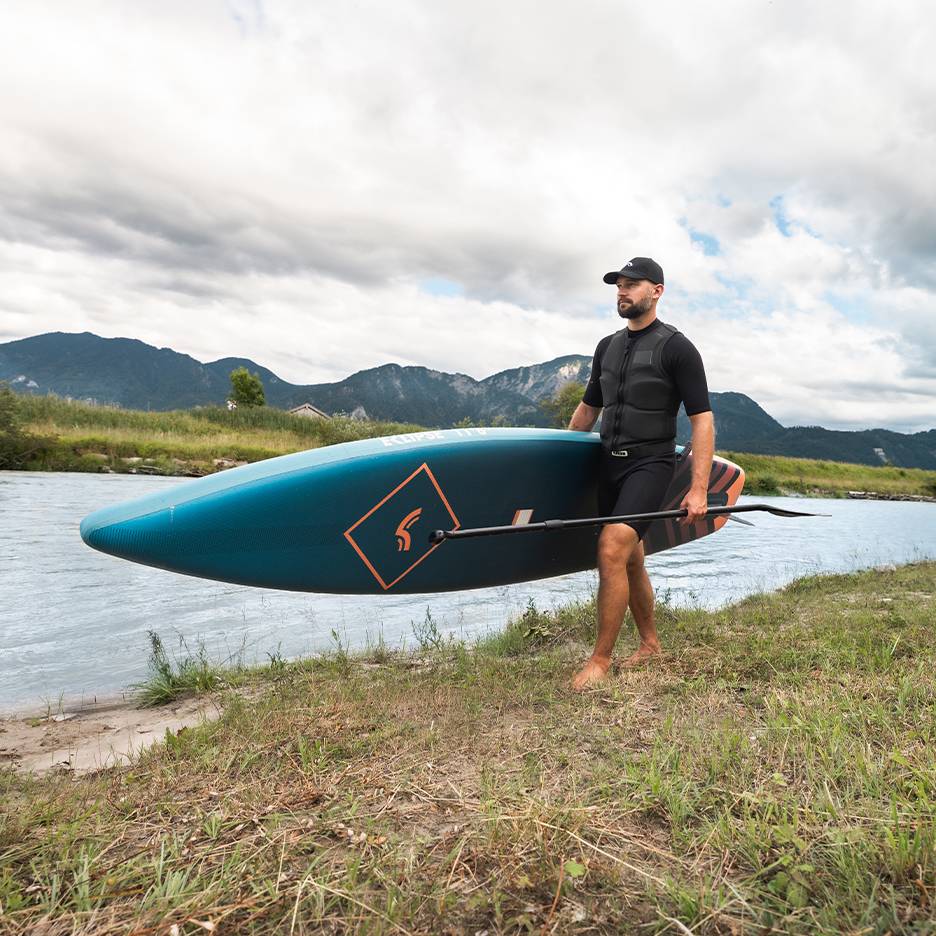
Wind and weather are extremely important for SUP and can be crucial in determining how strenuous your tour will be.The SUP pro recommends:“Check the forecast in an app, but also observe the water surface on site.” This can also be relevant for planning your route:“Especially in the afternoon the wind can pick up or change direction—then you suddenly find yourself paddling against it.”
The correct posture
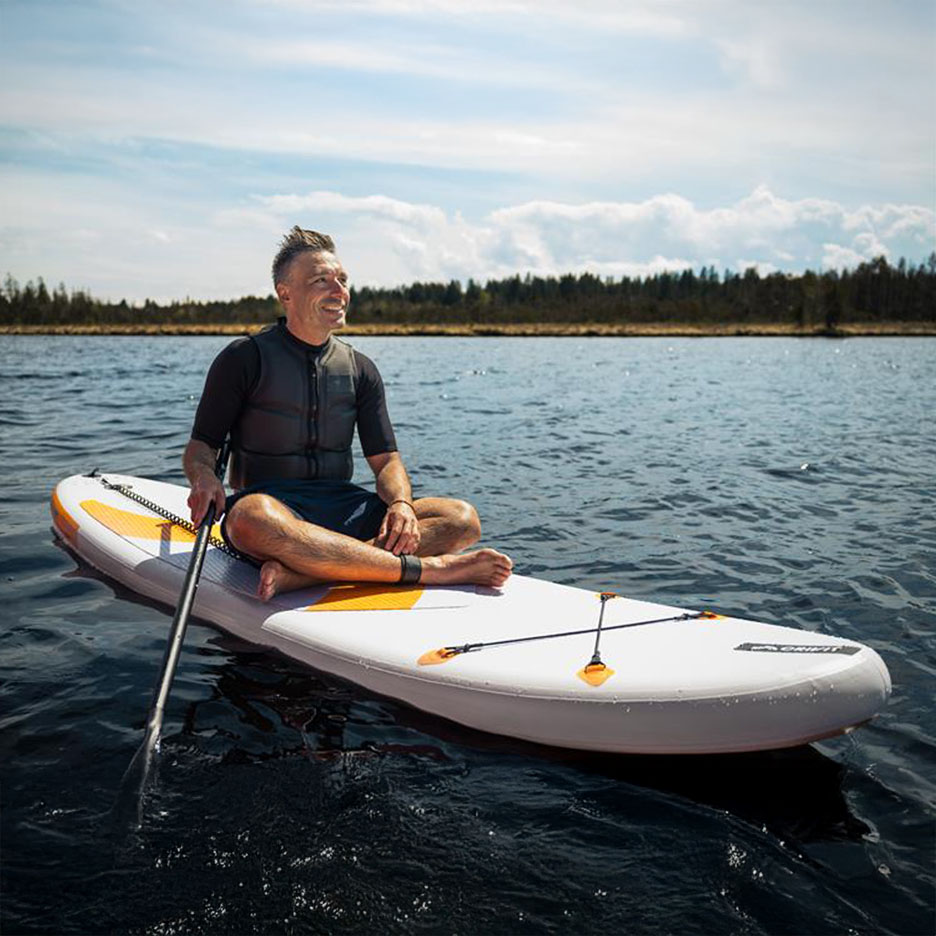
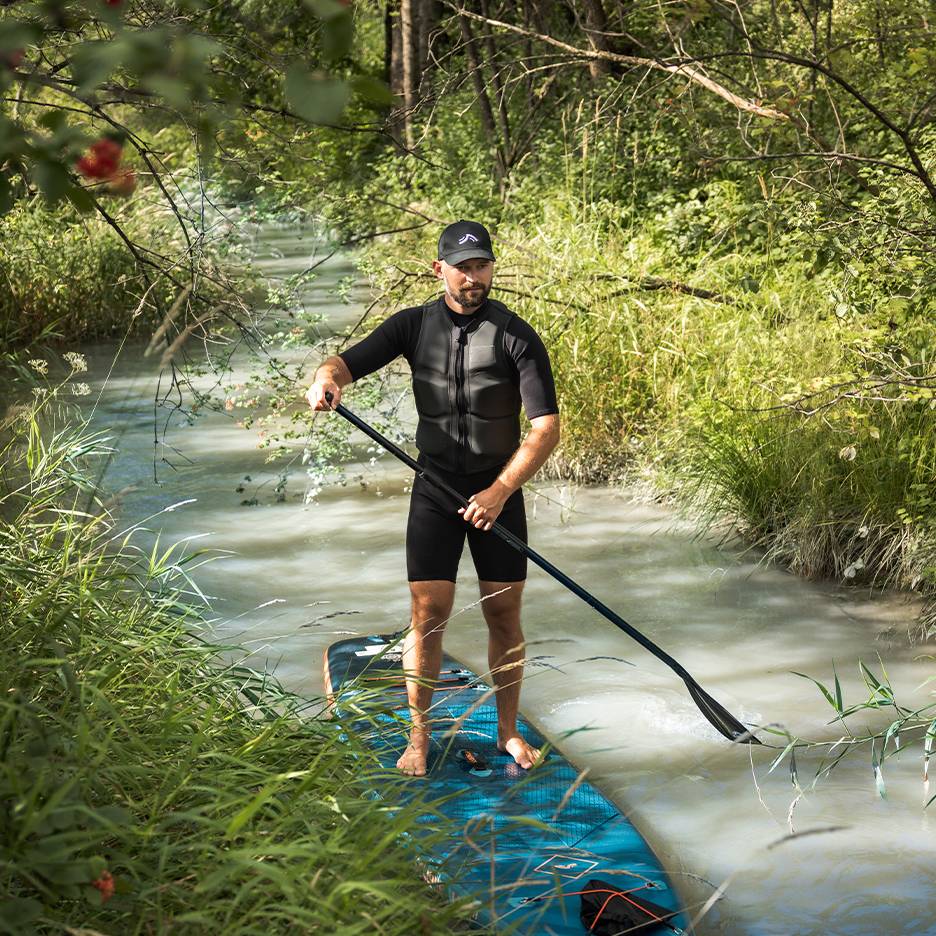
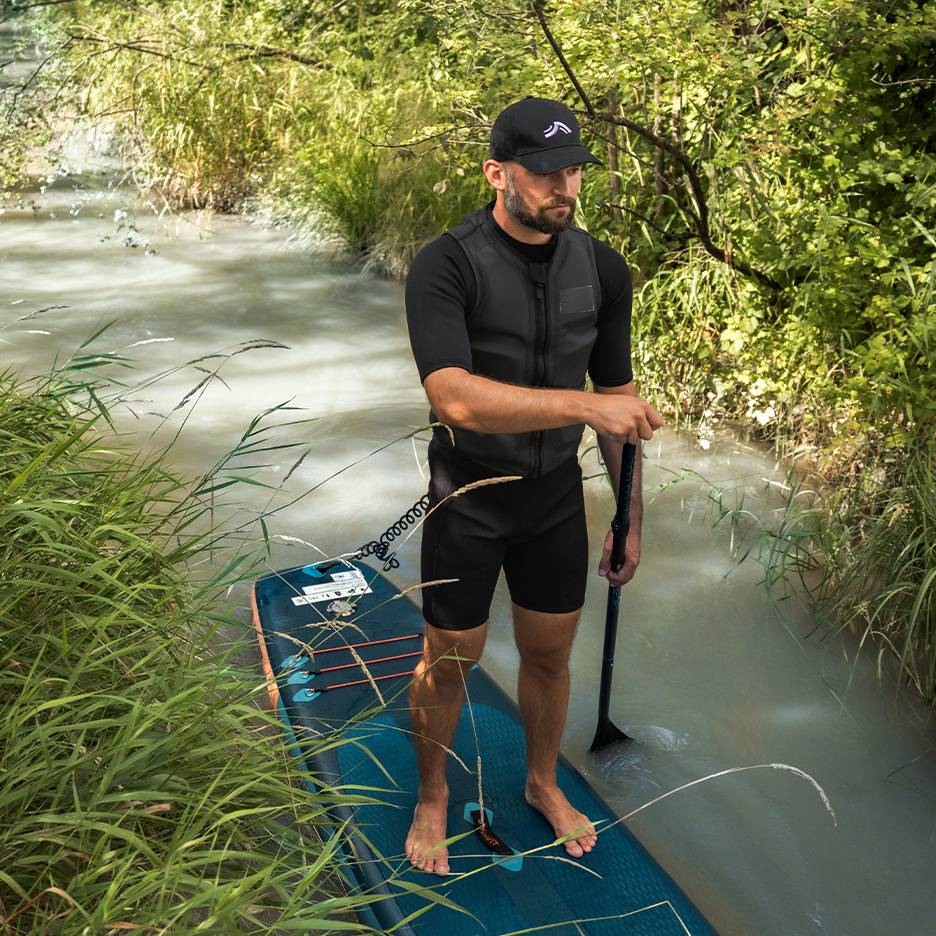
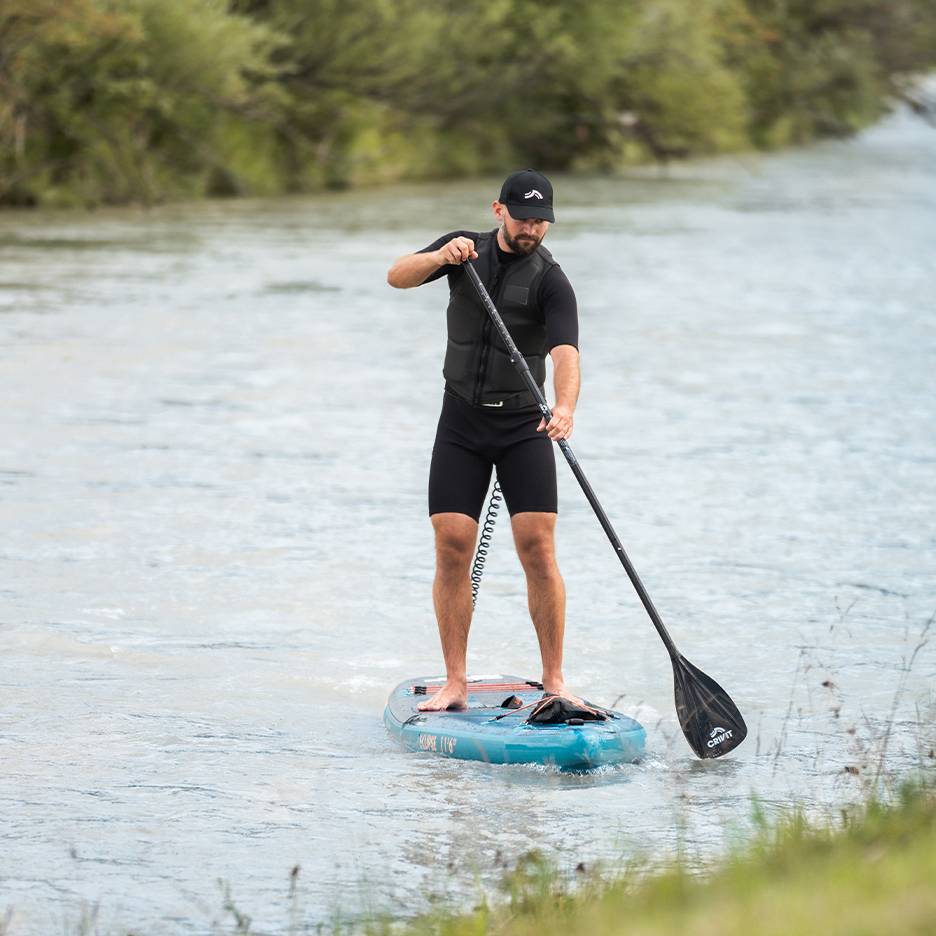
“Even if you are already familiar with the classic SUP—for touring SUP, a stable but relaxed posture is important,” Valentin says.“Walk across the shallow water onto the board, first kneel down, then rise up smoothly—note that the board is narrower.” Your posture on the SUP board should look like this:“Stay upright, but relaxed:Knees slightly bent, feet hip-width apart, gaze forward.The non-slip deck pad gives you an extra secure footing.”
Pay attention to your technique
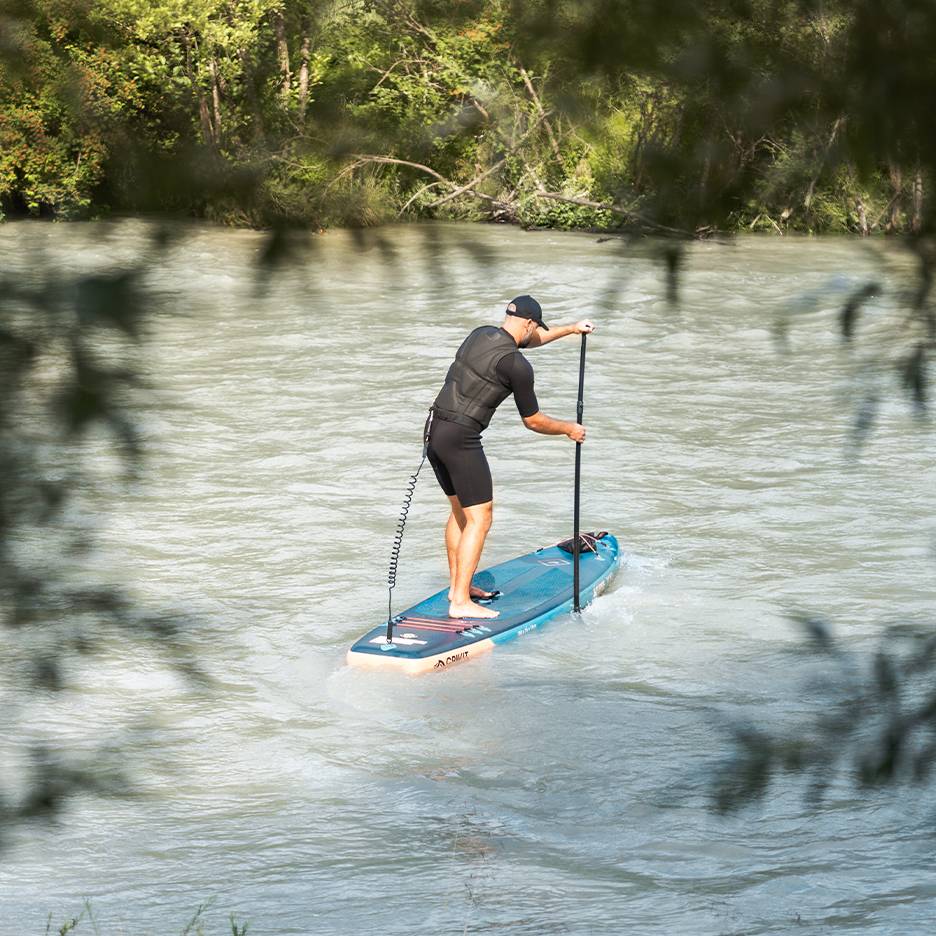
On long tours, a well-thought-out and efficient technology is everything.Valentin explains what your paddle stroke should look like:“The paddle stroke starts at the front—roughly at foot level and close to the board, so that you paddle straight ahead.Then pull back evenly—from your upper body, not your arms, to save energy.” His tip:“Find a rhythm that helps you stay efficient:One—immerse, Two—pull through, Three—transpose.Touring means paddling smoothly, calmly, and in a controlled manner—not hectically.When you find your flow, you'll get further with less energy.”
Train your endurance beforehand
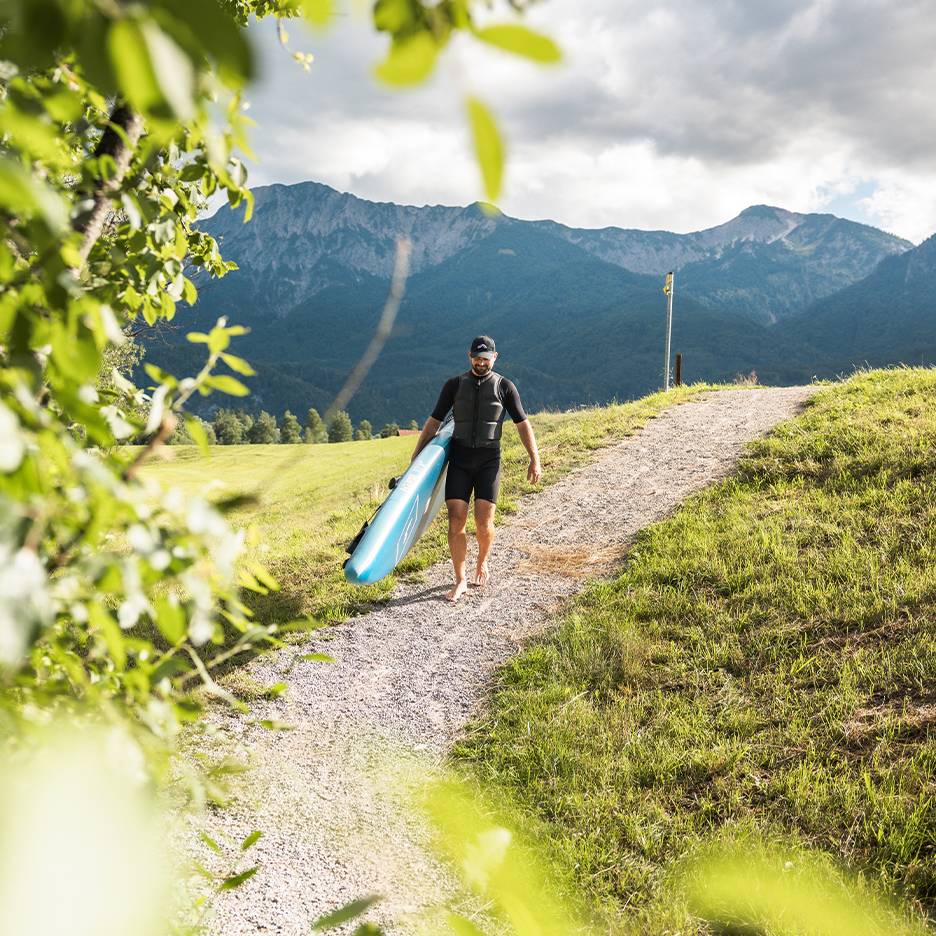
One thing Valentin has learned from his many years of experience on the SUP:“If you also train your endurance on land—with running, cycling or simple workouts—you will last longer on the water.It really pays off.” This means for you:Regular training sessions outside of SUP are worthwhile.
Plan the breaks
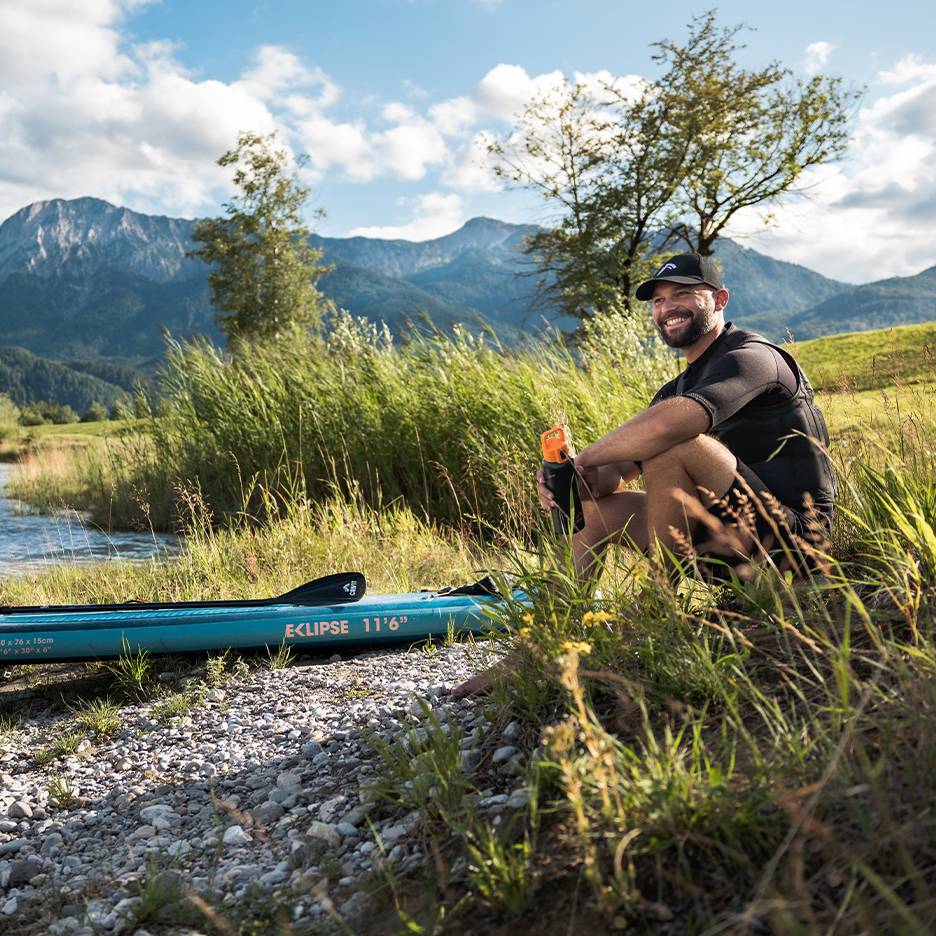
Touring SUP is all about the experience.You don't have to reach your destination particularly quickly; you can simply enjoy yourself in between.This requires breaks that you can use to recharge:“Find a quiet spot, drink enough water and protect yourself from the sun.The two storage nets at the front and back of the board offer enough space for everything you need, within easy reach.”
Keep track of your progress
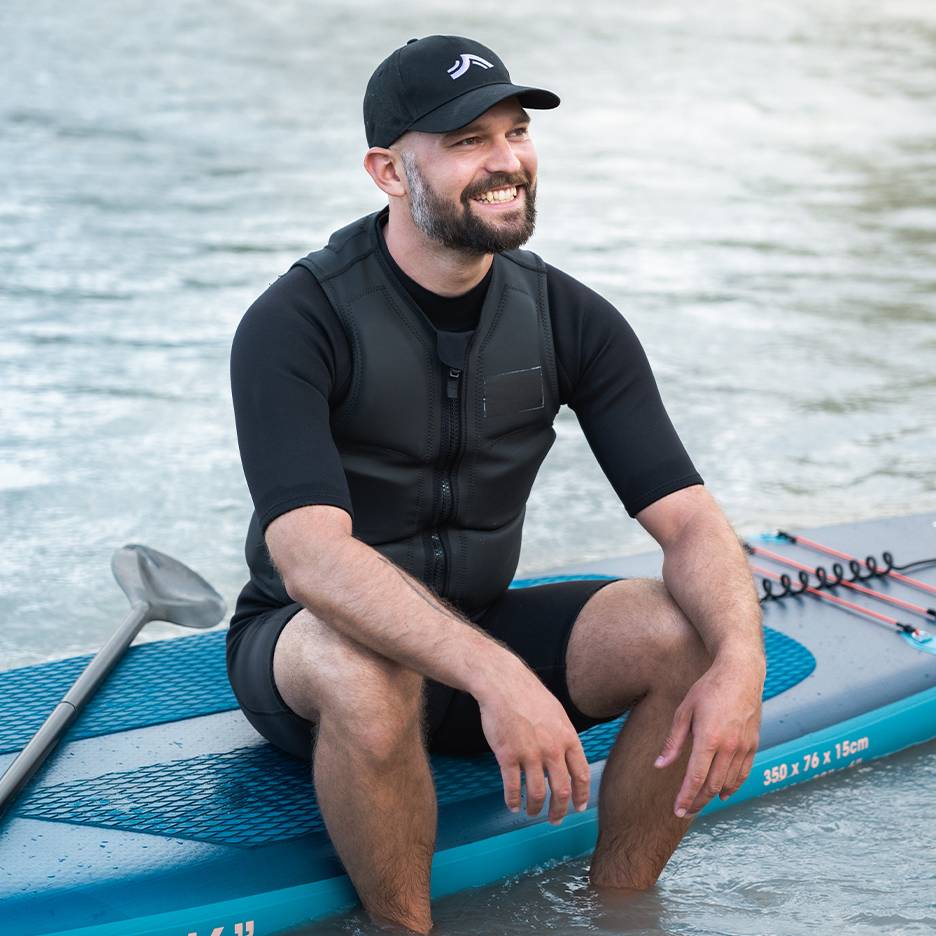
After the tour, it's time to start planning the next tour.Therefore, Valentin advises:“Reflect after the tour:How far did you get, how did you feel?Track your routes; this will help you assess your progress—and you'll learn what works for you.”
Touring SUP equipment: This is what you need for long SUP tours
“What you need is not much different from a trip with a classic SUP,” expert Valentin says.Nevertheless, there are some differences and recommendations that you should consider regarding your equipment for your touring SUP:
The Touring SUP
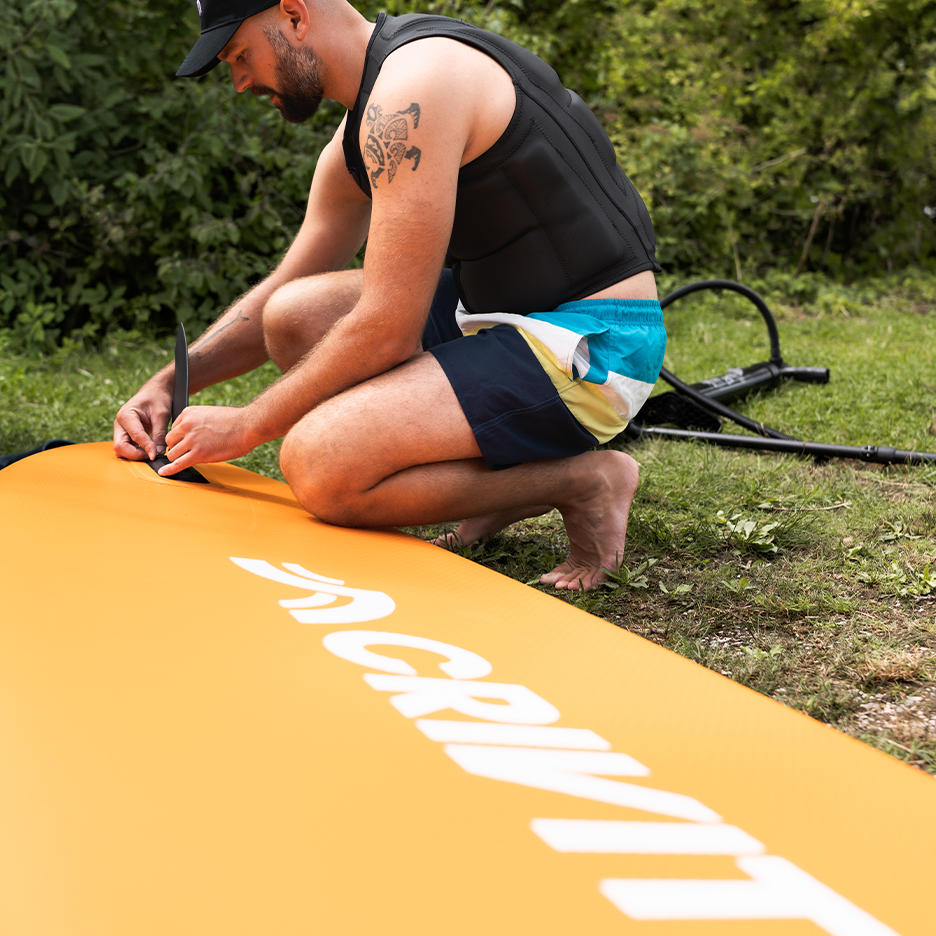
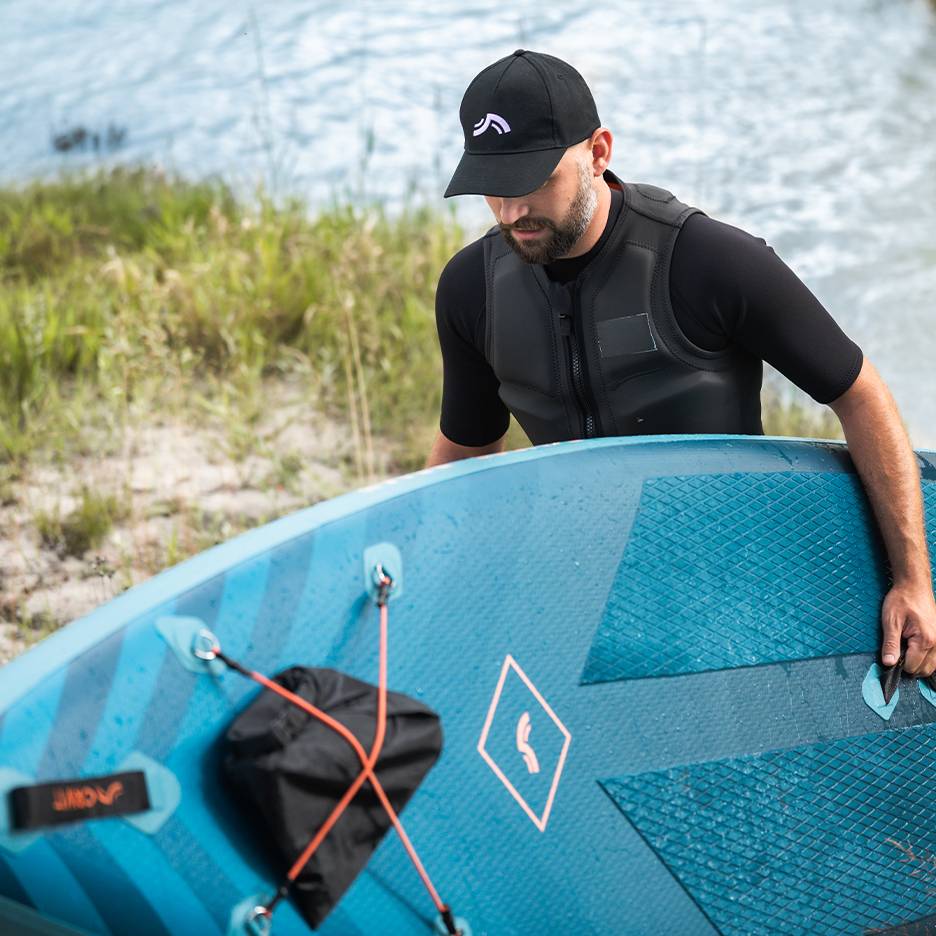
The shape of the touring SUP differs from that of the classic SUP, as the SUP pro explains:“It is longer and narrower than a classic all-round board.”The pointed nose allows the board to glide smoothly across the water surface.This is especially important on longer distances because it allows you to paddle more efficiently and cope better with wind and waves.” Nevertheless, a touring SUP offers a surprisingly stable position in the water due to its volume and length—ideal for day trips or multi-day tours with luggage.Valentin's tip:“The touring SUP generally needs a little more pressure than a wide all-round board—so that it remains stiff and glides well through the water.”
The right clothing
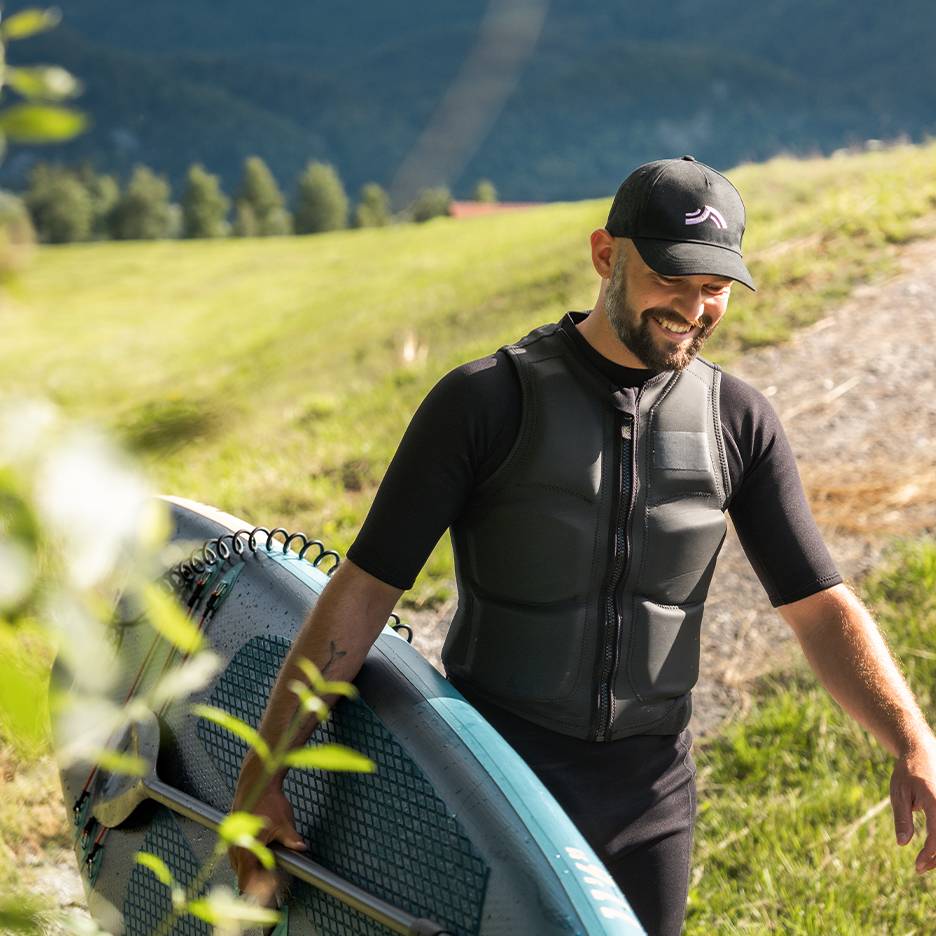
Unlike a short trip on the lake, you should adjust your clothing for touring SUP:“When you're traveling for a longer period of time, function counts:A wetsuit protects you from wind, waves and changing weather—but still allows you full freedom of movement while paddling.” Don't forget sunscreen and a hat if it's warm.
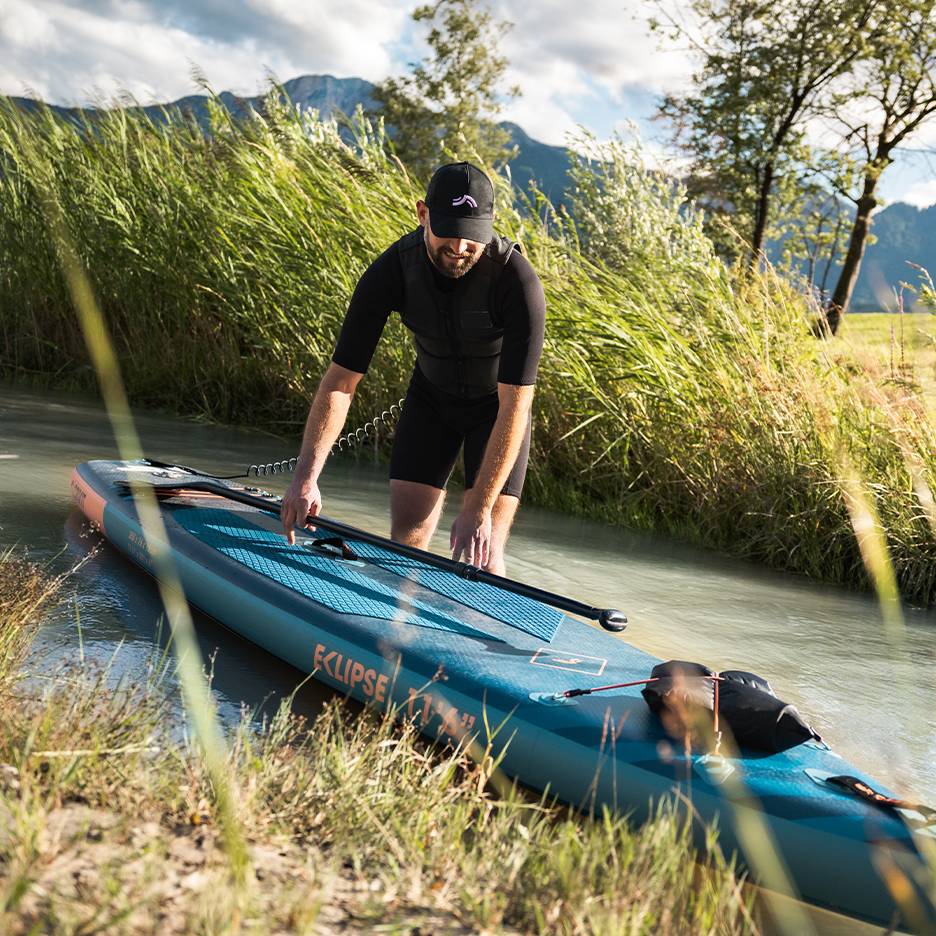
The paddle
Since you want to cover a certain distance when touring SUP, you need a good paddle.Valentin recommends the following:“For longer tours, it's best to adjust your paddle to be a little longer than with a classic SUP (approx. 17–22 cm longer than your height)—this way you glide more smoothly over the water and need less strength.”
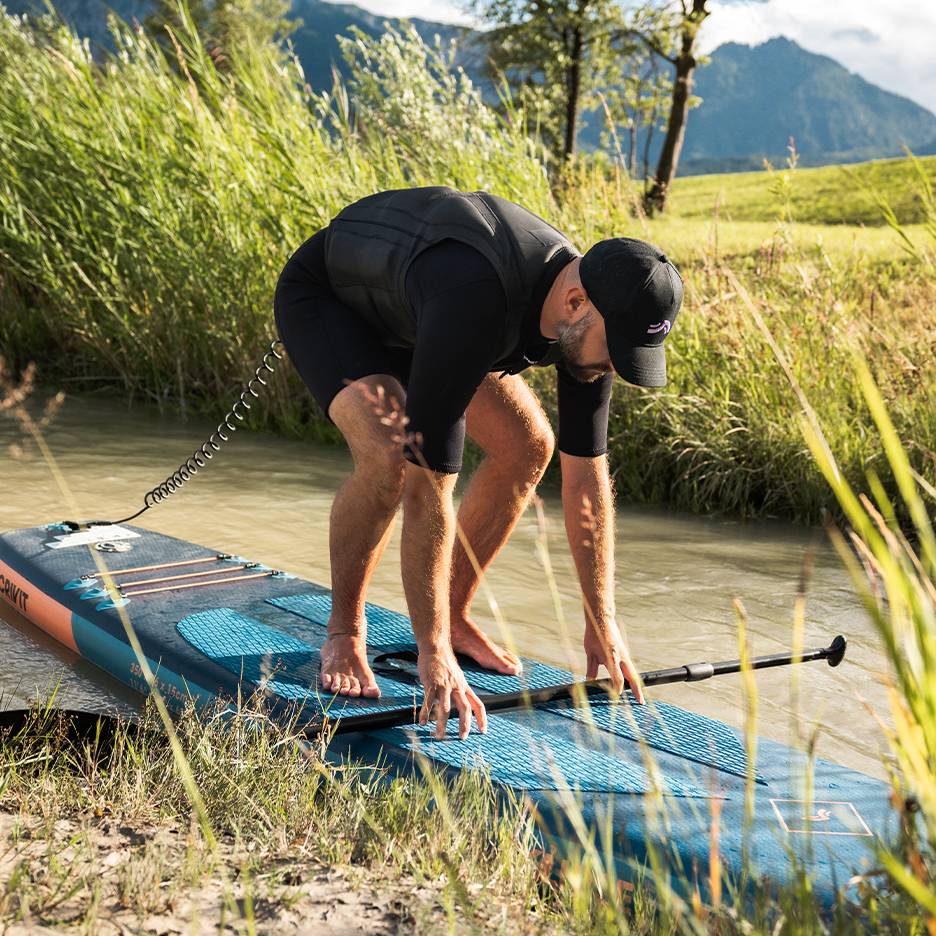
The leash
The leash, the connecting cord between you and the board, is a key safety element that you shouldn't do without when touring. “Especially in windy conditions, heavy currents, or over longer distances, the board can drift away very quickly if you fall into the water,” Valentin warns. The leash ensures that you always keep your board with you—and can hold onto it in an emergency.
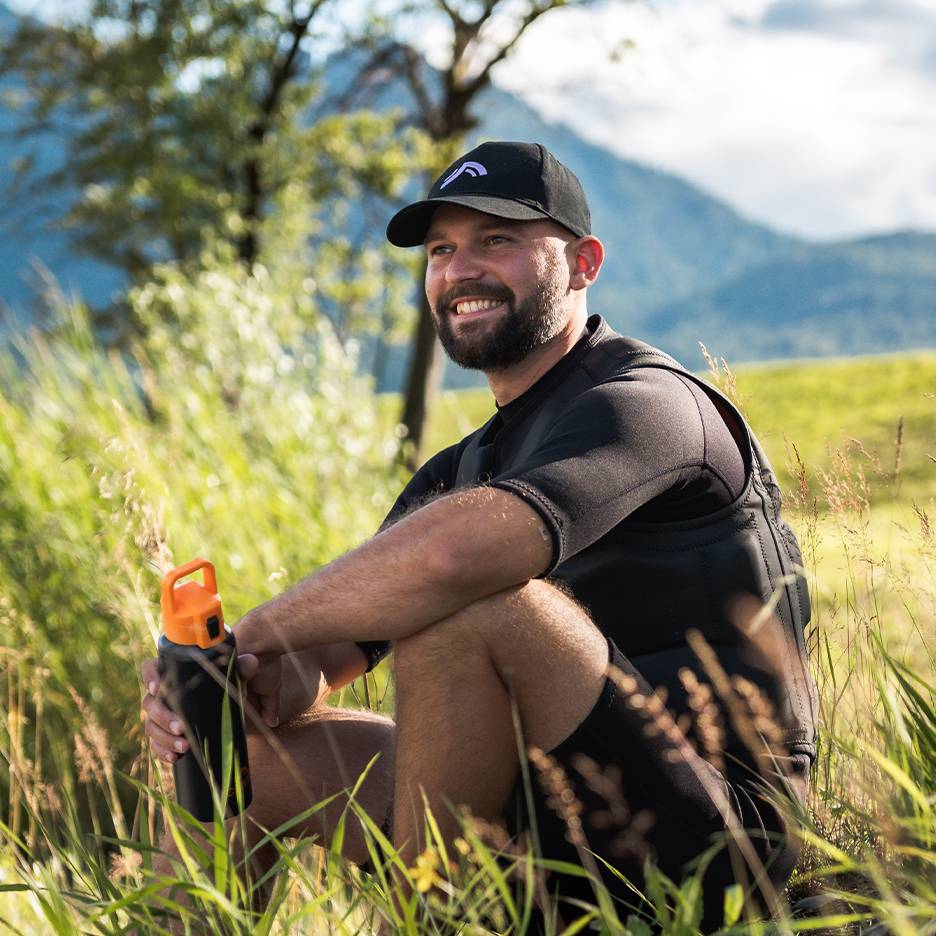
Food and water
Remember:With touring SUP, you're out for quite a while.Therefore, you should bring enough water and snacks.Nuts or muesli bars are ideal for quickly providing you with energy and giving you new power for paddling.
How to get started with touring SUP
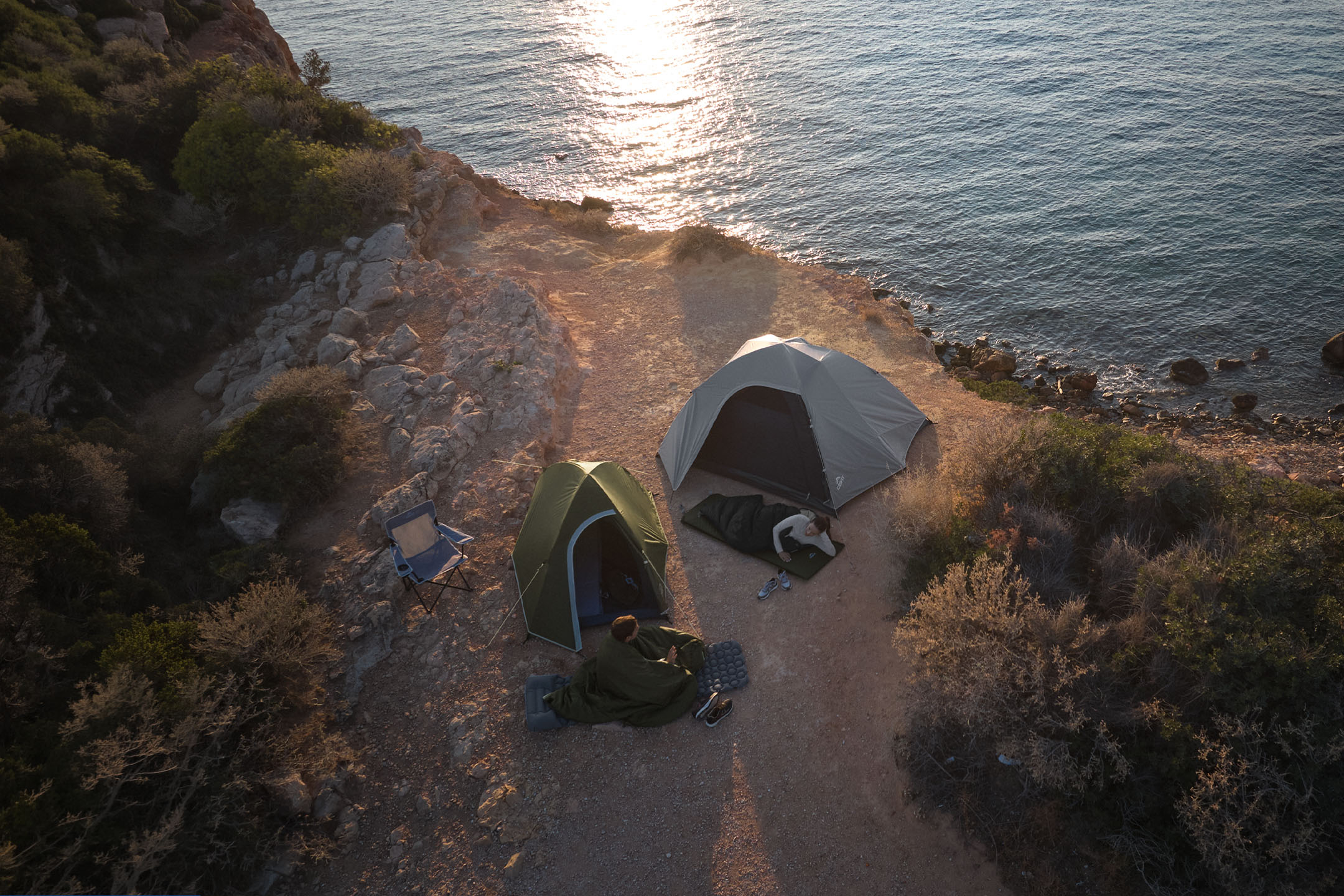
Longer SUP tours are a real experience—provided you prepare well.With the right board, realistic planning, safe technique and well-thought-out equipment, nothing stands in the way of your first tour with the touring SUP.Whether a day trip or an adventure with a tent:Your SUP can be your ticket to freedom—paddle away and discover your surroundings from a new perspective!
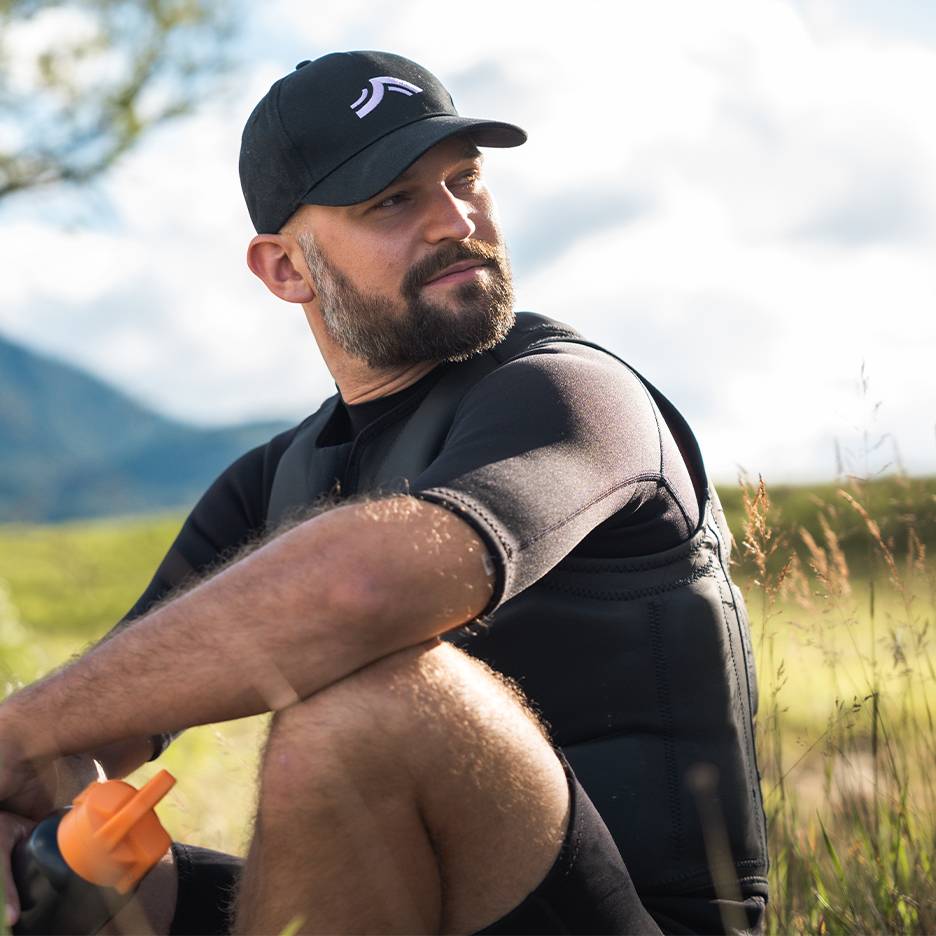
Profile of the water sports expert Valentin
Name:Valentin Illichmann
Age:26 years
Profession:Professional SUP surfer
Sporting background:
- 2017:German SUP Champion
- 2nd place at the European White Water Championships
- Currently occupies the leading positions in the world rankings based on the results of numerous national and international competitions.
This is what makes Valentin who he is:Valentin's passion is water sports.He is enthusiastic about SUP, kayaking, and snorkeling.Thanks to numerous successful performances in competitions, he has made a name for himself both on the national and international arena.
Frequently Asked Questions about Touring SUP
The touring SUP is longer, narrower and has a pointed nose—this allows it to glide better through the water and makes it more efficient for longer distances. The all-round SUP, on the other hand, is wider, more stable and ideal for shorter trips or beginners.
Yes!Despite its narrower shape, the touring SUP often offers a stable position in the water.If you feel confident on the all-round board and have already done some shorter tours, switching to a touring SUP is an ideal next step.
As a rule, the touring SUP requires between 15 and 20 PSI to achieve the optimal stiffness and glide.Be sure to check the manufacturer instructions and use a good pressure gauge for monitoring.
Preparation includes the endurance training such as jogging, cycling or cross-training.Paddling technique and balance can also be practiced in a targeted manner—ideally in combination with the short training trips to get used to them.